

7 AI Tools Every Restaurant Owner Should Be Using in 2026 (Tested & Honest Review)
Restaurant margins are thinner than ever, labor turnover is brutal, and diners are starting to search, and book through AI assistants instead of typing into Google. If you’re still running your restaurant the way you did in 2022, you’re leaving money, covers, and reviews on the table.
This guide breaks down seven AI tools that real restaurant owners and operators are using in 2026, tested against actual workflows, not marketing decks. We cover what each tool does, who it’s best for, honest limitations, and how to roll it out without disrupting service.
Why 2026 Is Different: AI Overviews Are Now a Reservation Channel
The biggest shift this year isn’t a new app, it’s where people are searching. Diners increasingly ask ChatGPT, Perplexity, or Google’s AI Overviews questions like “best Italian restaurant near me open now” and expect a direct answer, not a list of blue links. That means your restaurant’s visibility now depends on structured data, consistent listings, and AI-readable content, a discipline often called Generative Engine Optimization (GEO) or Answer Engine Optimization (AEO), alongside traditional local SEO.
Restaurant groups using AI-driven local visibility tools alongside operational AI report measurable lifts: one large casual-dining group cut no-shows by roughly 14% and grew mid-week covers by nearly 28% after pairing demand forecasting with reservation data. That’s the kind of compounding effect this list is built around, tools that work together, not in isolation.
The 7 Tools (Tested)
1. Toast AI Best for POS-Driven Operations Intelligence
Toast has evolved from a point-of-sale system into a genuine operations brain. Its predictive scheduling engine analyzes years of sales history, weather, and local events to recommend staffing levels, and operators using it report monthly labor cost reductions in the 12–15% range. The standout feature in testing was menu intelligence, it flags underperforming dishes before they quietly erode margin, rather than waiting for a quarterly P&L review to reveal the problem.
Honest take: Powerful, but it’s an ecosystem play, you get the most value if you’re already on Toast hardware. Pricing runs around $69/month per terminal plus transaction fees, so it’s a bigger commitment than a software-only tool.
2. MarketMan Best for Inventory and Food Cost Control
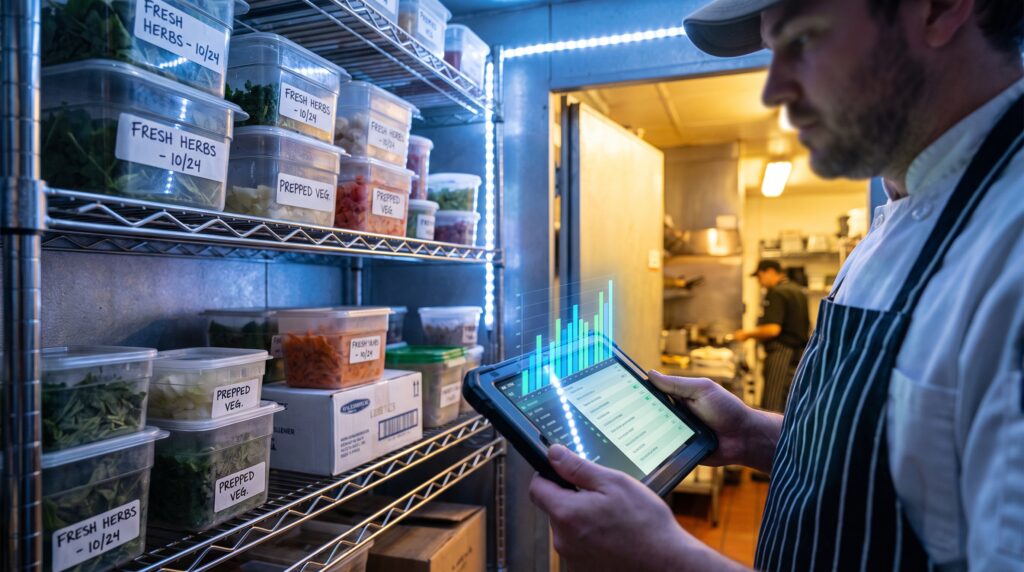
Food waste quietly drains $1,500–$2,000 a month from the average independent restaurant, and most owners underestimate it. MarketMan connects to your POS to track food costs per dish in real time and flags ingredient price spikes before they erode your margins, giving you a window to adjust pricing or switch suppliers. Reported waste reductions land in the 5–10% range for restaurants that actually act on the alerts.
Honest take: The tool is only as good as your data discipline, if receiving and counting inventory is sloppy, the forecasts will be too. Budget a real onboarding week, not a weekend.
3. ChatGPT (Plus) Best for Marketing Copy, Reviews, and Staff Docs
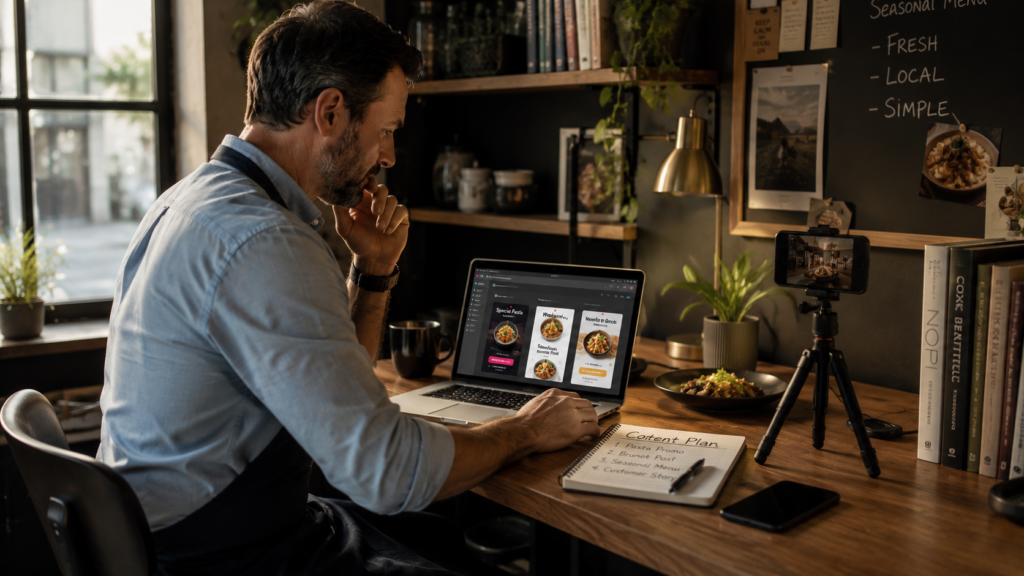
Still the highest ROI-per-dollar tool on this list. At roughly $20/month, it handles menu descriptions, social captions, review responses, staff training documents, and catering inquiry replies. The Advanced Data Analysis feature lets you upload sales exports and ask plain-language questions about which dishes and nights are most profitable, something most POS dashboards make needlessly difficult.
Honest take: Output quality depends entirely on prompt quality. A useful starting prompt: “Rewrite these menu descriptions to sound more appetizing and justify premium pricing in a [casual/upscale/farm-to-table] tone, with allergen callouts.” Generic prompts produce generic, forgettable copy, every output still needs a human edit pass before it’s customer-facing.
4. Popmenu Best for Automated, Restaurant-Specific Marketing
Popmenu reads your existing website, menu, and upcoming events, then auto-generates a content calendar, social posts, email campaigns, slow-Tuesday promos, based on what’s actually happening at your restaurant, rather than generic templates.
Honest take: This solves the “marketing happens at 11pm with whatever energy is left” problem better than most tools on this list, but it works best as a second layer on top of a real website, not a replacement for one.
5. Ovation (or a comparable AI feedback-routing tool) Best for Reputation Management
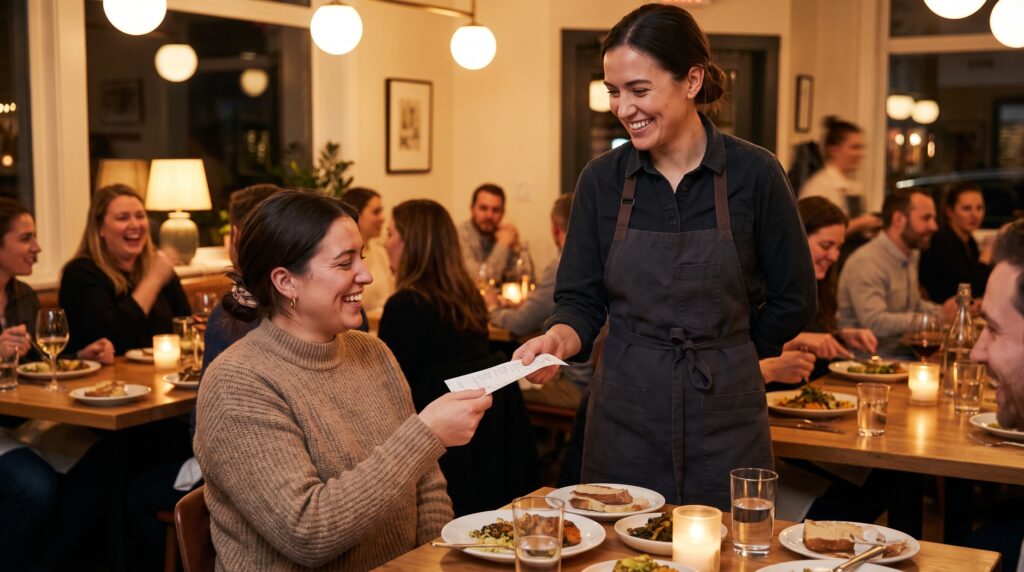
Ovation-style platforms capture guest feedback through short post-visit text surveys and instantly route unhappy guests to a private resolution path while nudging happy guests toward a public review. Brands using AI sentiment routing like this report service-complaint reductions in the 20–30% range, simply because problems get caught before they go public.
Honest take: It won’t fix a genuinely bad night of service, it just stops a bad night from becoming a permanent 1-star review. Treat the alerts as an operations signal, not just a PR shield.
6. Canva AI Best for Daily Visual Content
Restaurants need new visuals constantly: daily specials graphics, event flyers, catering menus, gift card promos. Canva’s Magic Studio tools handle background removal and food-photo touch-ups well enough that, for an owner posting daily, the tool pays for itself within the first week of consistent use.
Honest take: Templates can look generic without real customization effort, set up your brand kit (fonts, colors, logo) once, on day one, or every post will look like everyone else’s.
7. A GEO/Local-AI-Visibility Platform Best for Being Found Inside AI Answers
This is the newest and most consequential category on the list. As more diners book and ask questions inside ChatGPT, Perplexity, and AI Overviews instead of classic search results, ranking in the local “map pack” and being cited correctly by AI assistants has become arguably the single highest-ROI growth lever in hospitality this year. These platforms manage listing consistency, review signals, and structured data across the platforms AI models actually pull from.
Honest take: This category is moving fast and is genuinely new, vet any vendor’s claims carefully, ask for case studies with real numbers, and avoid long contracts until you’ve seen results for a quarter.

Quick Comparison
| Tool | Best For | Typical Cost | Honest Limitation |
|---|---|---|---|
| Toast AI | Scheduling & menu analytics | ~$69/mo/terminal + fees | Best within the Toast ecosystem |
| MarketMan | Inventory & food cost | Custom pricing | Needs disciplined data entry |
| ChatGPT Plus | Copy, reviews, staff docs | ~$20/mo | Needs strong prompting |
| Popmenu | Automated marketing | Custom pricing | Best paired with a real site |
| Ovation-style tools | Reputation management | Custom pricing | Doesn’t fix service itself |
| Canva AI | Visual content | Free–$15/mo | Needs a brand kit setup |
| GEO/AI-visibility platforms | AI Overview & assistant visibility | Custom pricing | Young category, vet vendors |
A Simple Framework for Rolling These Out
Don’t adopt all seven at once, about 60% of restaurant tech purchases get abandoned within 18 months, usually because owners pick too many tools or ones requiring heavy staff training. Instead:
- Diagnose the leak first. Is it labor cost, food waste, no-shows, reviews, or invisibility in search/AI answers? Pick the tool that targets your single biggest leak.
- Pilot for 30 days on one tool before adding a second. Track one number, labor cost %, waste $, review rating, or covers booked, before and after.
- Layer, don’t replace. The biggest gains in 2026 come from combining tools (e.g., POS data feeding marketing content, or reservation data feeding visibility insights), not from any single app in isolation.
- Audit your AI visibility quarterly. Search your own restaurant name and category inside ChatGPT and Google AI Overviews every few months, if you’re not mentioned, your GEO setup needs attention regardless of how good your operations tools are.
FAQs
Do small, independent restaurants actually need AI tools, or is this just for chains? Most of these tools now have pricing tiers built for single-location operators, not just multi-unit groups. Independent restaurants typically see the fastest payback from low-cost, high-frequency tools like ChatGPT for copy and Canva for visuals before investing in enterprise inventory or POS-level AI.
What’s the difference between SEO and GEO for a restaurant? Traditional SEO optimizes for ranking in Google’s blue-link results. GEO (Generative Engine Optimization) optimizes for being accurately surfaced and cited inside AI-generated answers, in tools like ChatGPT, Perplexity, and Google’s AI Overviews, which increasingly rely on structured listing data and review signals rather than keyword-stuffed web pages.
Which AI tool should a restaurant owner try first? Start with whichever tool fixes your most expensive problem. If reviews and reputation are hurting bookings, start there. If food cost is the issue, an inventory tool comes first. For most independent owners, a free or low-cost copy tool like ChatGPT is the easiest first step with no operational risk.
Can AI really reduce food waste in a measurable way? Yes, AI-powered inventory platforms that cross-reference sales history, weather, and local events with prep data have demonstrated waste reductions in the 30%+ range for some operators, translating to real monthly savings once staff act consistently on the alerts.
Will AI replace restaurant staff? No, these tools are best understood as removing repetitive admin work (scheduling math, review replies, content calendars) so staff and owners can spend more time on food and guest experience. The restaurants seeing the best results are the ones using AI to support hospitality, not substitute for it.
The Bottom Line
The restaurants pulling ahead in 2026 aren’t the ones chasing every new AI app, they’re the ones who picked two or three tools that solved a real, measurable problem, rolled them out carefully, and made sure they’re actually visible when a hungry customer asks an AI assistant where to eat tonight. Start with your biggest leak, pilot it for a month, and build from there.