

7 Best AI Tools for Hotels to IncreaseBookings in 2026 (Tested & Honest Review)

We tested the top AI tools for hotels are using in 2026 to boost direct bookings, revenue, and guest experience. Honest pros, cons, pricing signals, and a rollout framework.
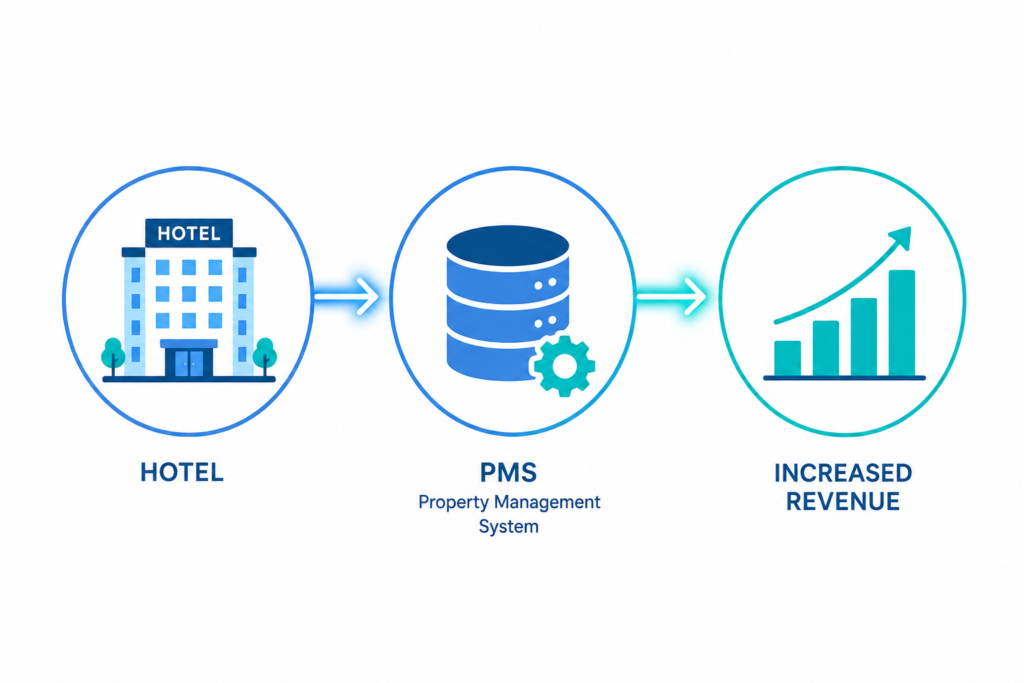
Hotels adopting AI has jumped fast industry research now puts adoption above 80%, yet only a small fraction of properties run AI as an integrated strategy rather than a bolt-on chatbot. That gap is where most of the missed revenue lives. The hotels seeing real lift in RevPAR and direct bookings aren’t the ones with the most tools they’re the ones using the right five, connected to their PMS, and measured against clear KPIs.
This guide breaks down the five categories of AI tools that actually move the booking needle in 2026, with real product examples, honest trade-offs, and a framework you can apply this quarter whether you run an independent boutique or a multi-property group.
Why “AI for Hotels” Needs a Framework, Not a Shopping List
Every vendor claims to be “AI-powered” in 2026. The distinction that matters for topical authority and for your bottom line is whether a tool does three things:
- Understands hospitality context (room types, rate plans, PMS data), not generic chat.
- Connects to your existing stack PMS, channel manager, CRM, booking engine.
- Drives a measurable outcome: conversion, RevPAR, or reduced cost-per-booking.
With that filter, five categories consistently outperform: revenue management, guest messaging/upsell, PMS-native marketing, business intelligence, and conversational lead capture. Below is one tested, honest pick for each.
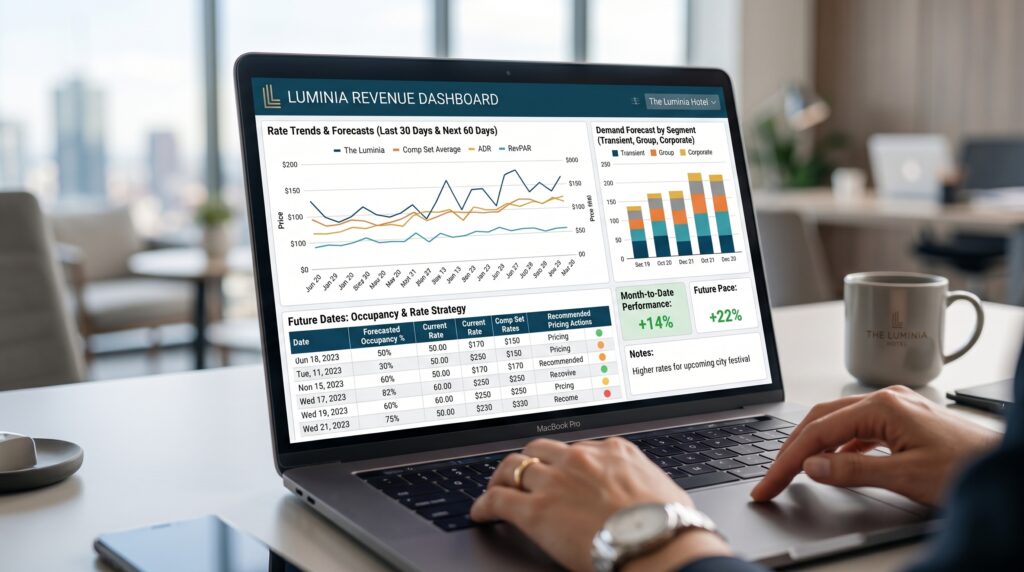
1. IDeaS Best for AI-Driven Revenue Management
What it does: IDeaS uses predictive analytics to recommend room rates by analyzing historical booking patterns, competitor pricing, and demand pace, then adjusts pricing recommendations as conditions shift.
The honest take: Hotels using AI-powered revenue management tools like IDeaS report average revenue increases in the 10–15% range compared to manual rate-setting, according to hospitality research cited by multiple industry sources. That’s a meaningful number, but it assumes your revenue manager actually trusts and acts on the recommendations the tool doesn’t replace judgment on group blocks, contracted rates, or local nuance.
- Pros: Mature forecasting engine, strong for mid-size to large properties, integrates with major PMS platforms.
- Cons: Overkill (and pricey) for a 20-room independent property; requires clean historical data to forecast well.
- Best for: Properties with 50+ rooms and a dedicated revenue function.
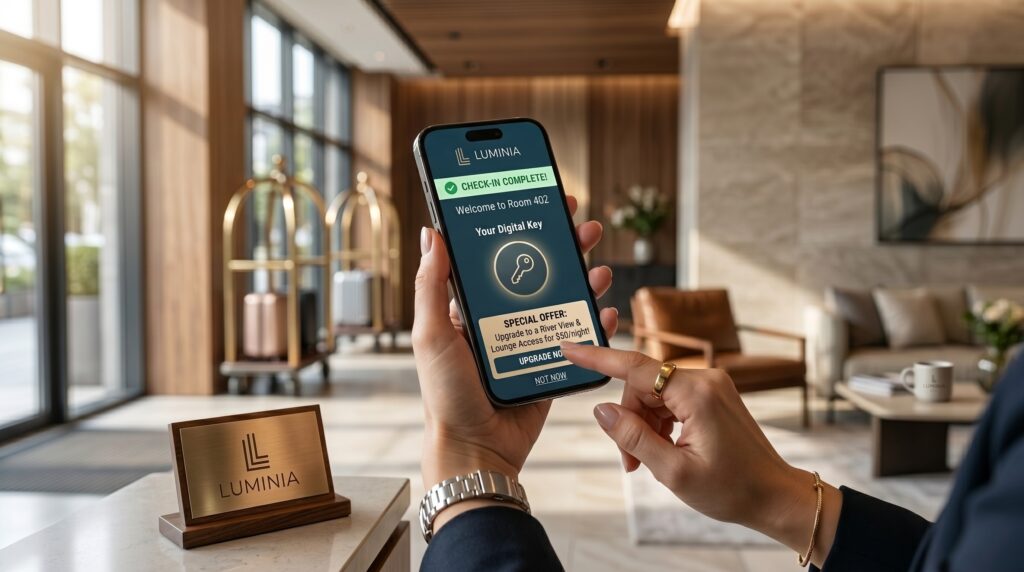
2. Canary Technologies Best for Guest Messaging, Upsells & Digital Check-In
What it does: Canary automates the guest journey pre-arrival messaging, mobile/contactless check-in, ID verification, and AI-driven upsell offers (room upgrades, late checkout, spa add-ons) triggered at the right moment in the stay.
The honest take: This is where AI tools shift from “nice to have” to revenue-generating, because upsells convert best when they’re timed to guest behavior rather than blasted to everyone. Some platforms in this category report dynamic-pricing-linked revenue gains as high as 25% when upsell and pricing signals are combined a figure worth treating as a ceiling, not a guarantee.
- Pros: Genuinely reduces front-desk workload; upsell revenue is easy to track and attribute.
- Cons: Value depends heavily on PMS integration quality; some users note the upsell logic needs tuning per property type.
- Best for: Hotels prioritizing ancillary revenue and contactless guest experience.
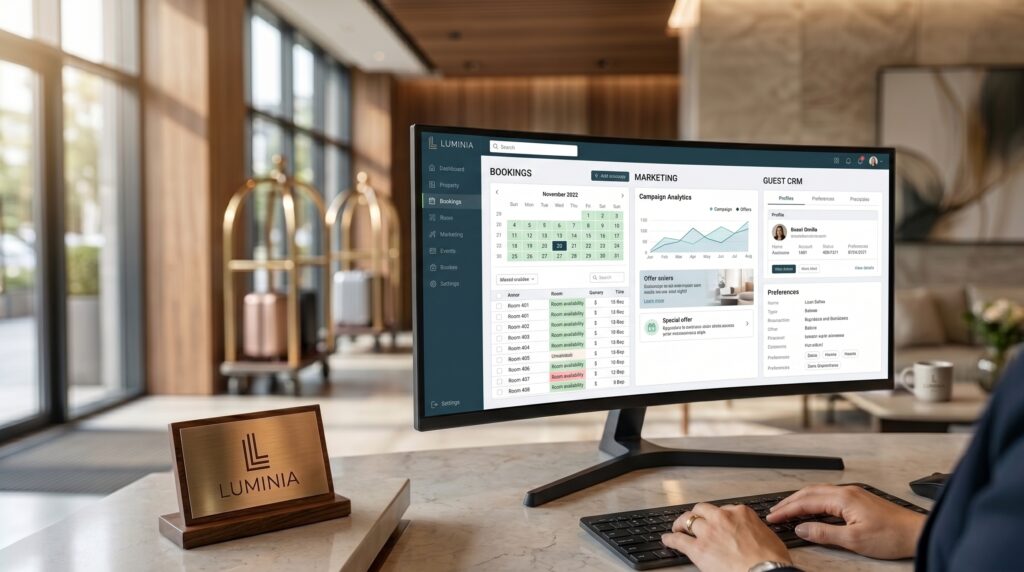
3. Cloudbeds Best AI-Native PMS for Direct Bookings
What it does: Cloudbeds bakes AI into the property management layer itself its Digital Marketing Suite automates review responses, retargets website visitors who didn’t book, and optimizes direct-booking campaigns, while its Guest Marketing CRM uses AI segmentation to re-engage past guests.
The honest take: The strength here is consolidation one system handling PMS, channel management, and marketing means your data isn’t fragmented across five dashboards. Reviewers do flag that reporting granularity and multi-property rate-plan configuration could be deeper, so larger groups with complex rate structures may need a companion revenue tool (like #1 above).
- Pros: Reduces OTA dependency by actively driving direct traffic back to your own booking engine.
- Cons: Not the most sophisticated standalone revenue engine for complex, multi-property portfolios.
- Best for: Independent hotels and small groups wanting AI marketing and PMS in one place.
4. Duetto Best for Revenue Business Intelligence
What it does: Duetto’s Scoreboard and forecasting tools go beyond rate-setting into pace reports and market-share analysis showing not just what rate to set, but how you’re trending against your comp set and your own forecast.
The honest take: The predictive angle is the real differentiator: it’s built to help revenue managers anticipate a demand shift before it shows up in the booking curve, rather than reacting to it. That’s a genuine step up from spreadsheet-based pace tracking, but it’s a BI layer it works best alongside a pricing engine, not as a replacement for one.
- Pros: Strong market-share visibility; good for teams that want to understand why demand is moving, not just adjust to it.
- Cons: Best value shows up with a dedicated revenue manager who can act on the insights.
- Best for: Revenue-focused hotel groups that already have pricing discipline and want sharper forecasting.

5. AI Guest Chatbots (Canary/Chatlyn/HiJiffy-class tools) Best for Direct-Booking Lead Capture
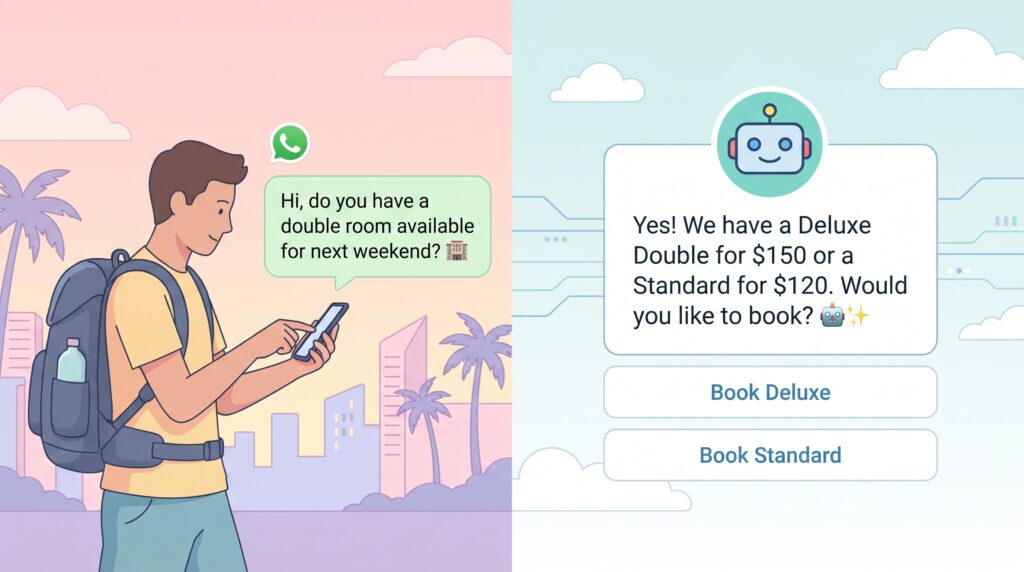
What it does: Hospitality-specific chatbots on WhatsApp and website chat answer availability and rate questions instantly, capture leads before they leave for an OTA, and route complex requests to staff with context attached.
The honest take: The line between “generic chatbot” and genuine AI assistant matters here. A basic FAQ bot answers questions; a hospitality-trained assistant checks live availability, nudges toward direct booking, and hands off warm leads to a human when needed. Response speed is the underrated lever most abandoned inquiries happen because no one answered fast enough, not because the guest didn’t want to book.
- Pros: Low cost of entry, fast to deploy, immediately visible impact on inquiry-to-booking conversion.
- Cons: Quality varies enormously by vendor; a poorly trained bot can frustrate guests as much as it converts them.
- Best for: Any hotel independent or branded that gets pre-arrival questions outside front-desk hours.
Quick Comparison
| Tool | Core Job | Best For | Honest Limitation |
|---|---|---|---|
| IDeaS | Dynamic pricing | 50+ room properties | Needs clean historical data |
| Canary Technologies | Upsell & check-in | Ancillary revenue | Value tied to PMS integration |
| Cloudbeds | AI-native PMS + marketing | Independents & small groups | Lighter reporting depth |
| Duetto | Revenue BI/forecasting | Data-driven revenue teams | Pairs best with a pricing engine |
| AI chatbots | Lead capture | Every property type | Vendor quality varies widely |
A 4-Step Framework for Rolling Out AI Without Wasting Budget
- Audit your leak, not your tech stack. Are you losing bookings to slow response times, mispriced rooms, or weak upsells? Pick the tool category that matches your actual leak first.
- Integrate before you automate. A tool disconnected from your PMS adds a dashboard, not a result. Confirm two-way sync before signing a contract.
- Set one KPI per tool. Direct booking conversion rate for chatbots, RevPAR for pricing tools, upsell attach rate for guest messaging. Vague goals produce vague ROI.
- Review quarterly, not annually. AI recommendations drift as your market does a tool that worked last shoulder season needs a check-in, not a set-and-forget mindset.
How This Connects to AI Search & Discovery
One shift worth flagging for 2026: travelers are increasingly asking AI assistants like ChatGPT to shortlist and compare hotels directly. Keeping your booking channels, rates, and property information consistent across your website, OTAs, and Google Business Profile isn’t just good hygiene anymore it directly affects whether AI tools recommend and cite your property at all.
FAQs
Do AI tools actually increase hotel bookings, or is it hype? The honest answer is: it depends on integration. Tools connected to your PMS and used with a clear KPI consistently show measurable gains in direct bookings, upsell revenue, or RevPAR. Standalone tools with no data connection rarely move the needle on their own.
What’s the best AI tool for a small independent hotel with a tight budget? Start with an AI chatbot for guest messaging and an AI-native PMS like Cloudbeds. Both have low entry costs and address the most common leak slow response times before you invest in a dedicated revenue management platform.
How much can AI realistically increase hotel revenue? Dynamic pricing tools report average gains of roughly 10–15%, with some upsell-and-pricing combinations reported as high as 25% in favorable conditions. Treat the higher end as a best-case scenario, not a baseline expectation.
Can AI replace a revenue manager or front desk team? No current AI deployments in hospitality are built to augment staff by handling repetitive analysis and communication, not to replace the judgment needed for group rates, VIP handling, or complex guest situations.
Which AI tool should I implement first? Whichever one fixes your biggest visible leak. If guests are asking questions after hours and not booking, start with a chatbot. If your rates are set manually and inconsistently, start with a pricing tool.
Final Take
The hotels winning with AI in 2026 aren’t chasing every new feature they’re matching one well-integrated tool to one clear leak in their booking funnel, measuring it, and expanding from there. Start with the gap costing you the most bookings right now, not the tool with the flashiest demo.